Overview
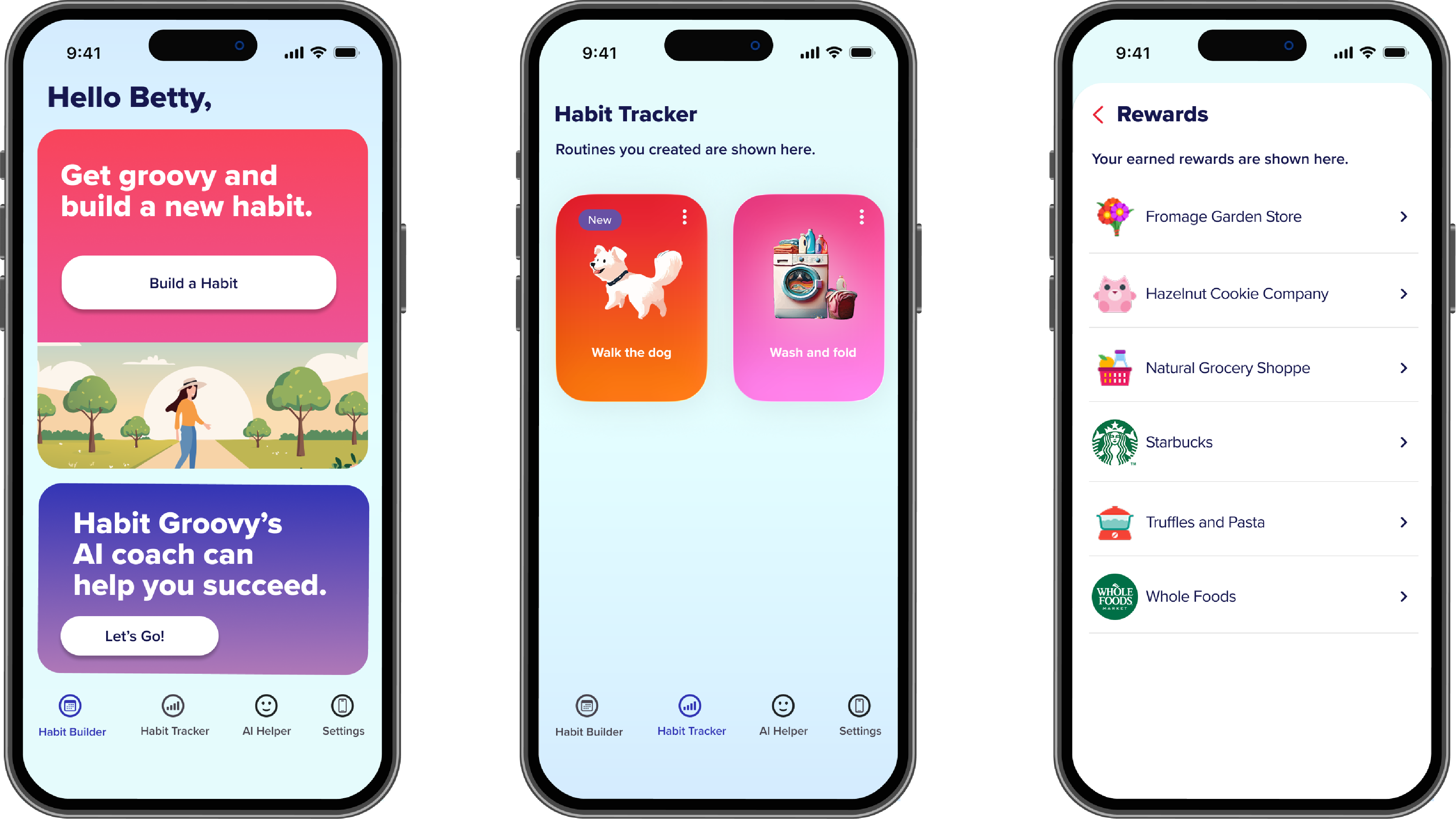
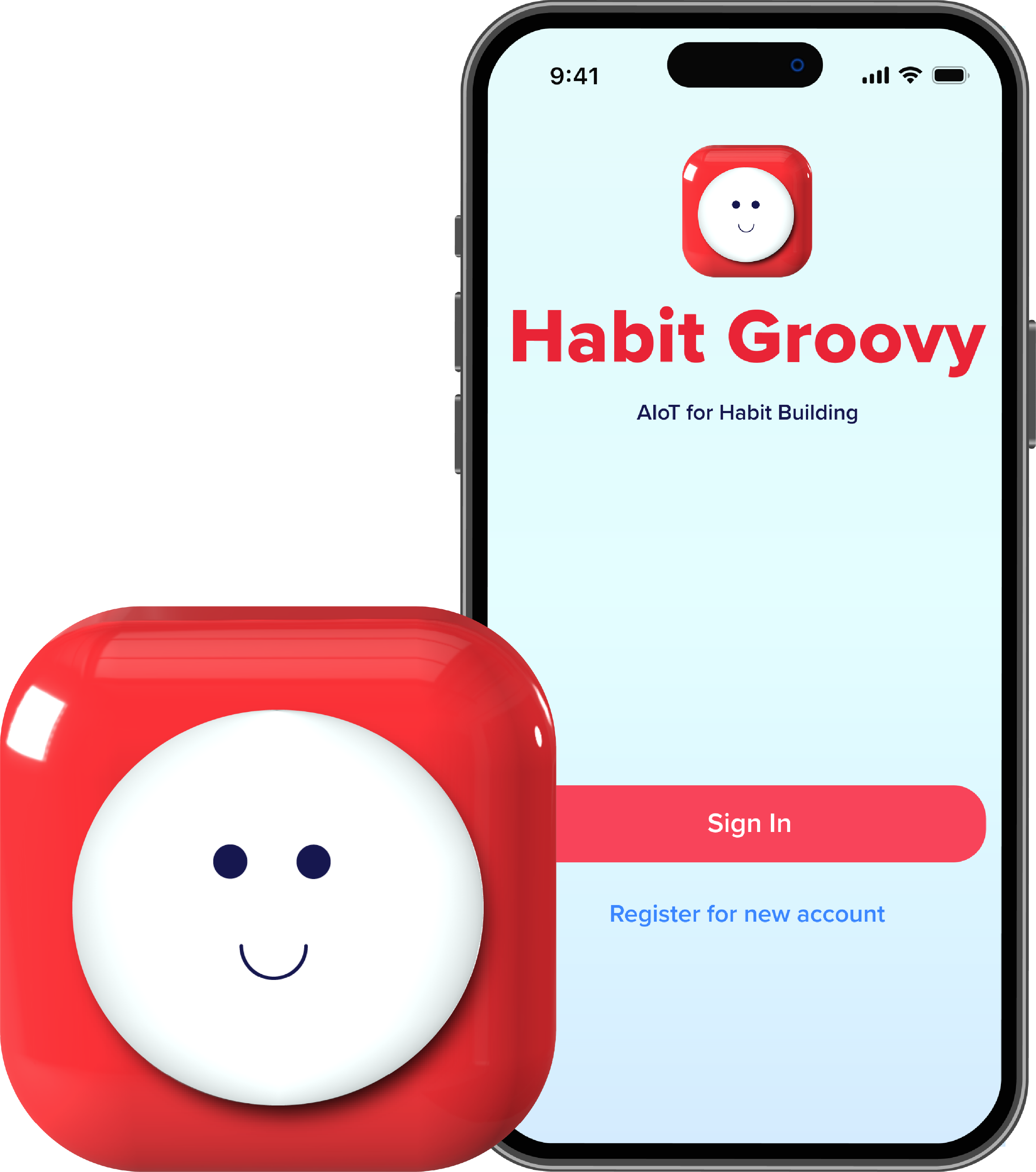
Habit Groovy is an AIoT-enabled device that simplifies habit formation by combining visual and auditory cues to encourage consistent task completion. Paired with a smart habit-tracking app, it leverages real-time data and AI-powered feedback loops to deliver personalized insights and behavioral nudges. This seamless integration of hardware and software creates an intuitive, data-informed experience that makes building better habits more effective.
How Might We Statement
How might we simplify the habit-building journey so that it feels easy, rewarding and natural for users?
Research
There’s a growing body of research that shows habits like meditation and exercise can transform your life. It makes you healthier and calmer. Forming a habit can be achieved by repeating a behavior in response to a cue. For example, a cue can be a reminder or alert that you associate with performing a task repeatedly or in a consistent manner. Repetition of a routine is required in habit building. It is through this process of repetition that automaticity is formed. When tasks are automated, there is less cognitive load and effort.
Why Do You Need a Cue to Build a Habit?
Your brain links cues to actions, making behaviors easier to perform without much thought, attention, or motivation. For example, a red traffic light instantly signals you to press the brake pedal—you act automatically, without conscious processing. This automatic response is a key building block of forming lasting habits.
Source: Lally, P., et. al., European Journal of Psychology, 2010

How Long Before You can Build a Habit?
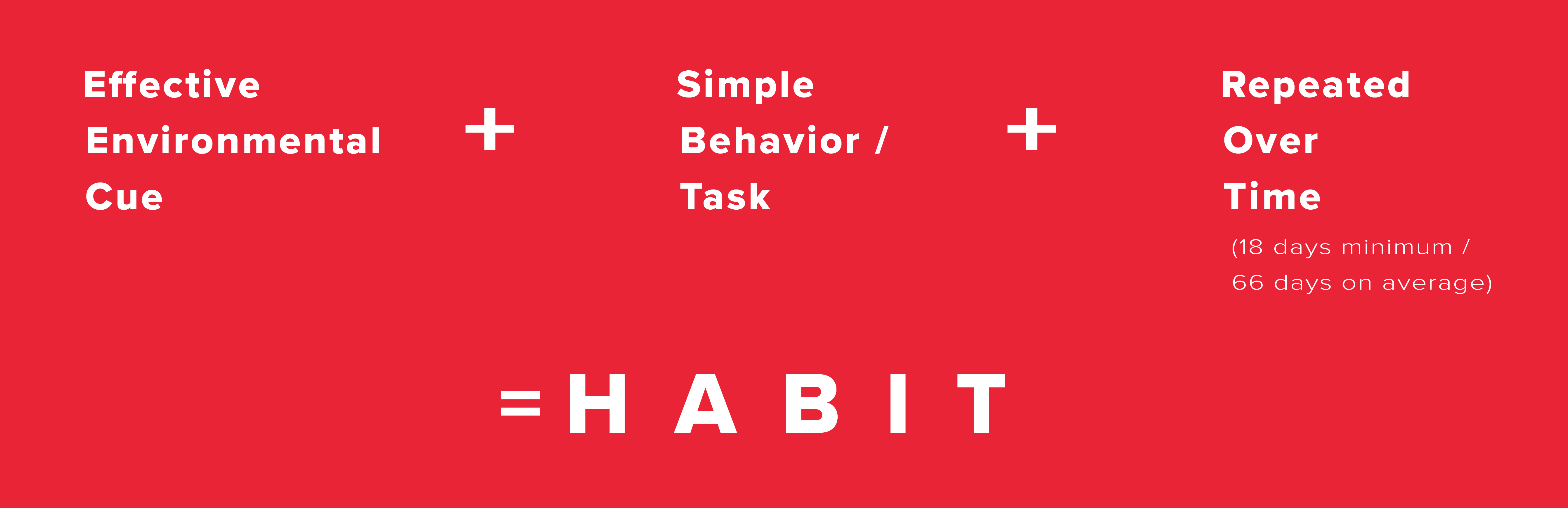
Research revealed that habit is formed in as little as 18 days and on average, about 66 days. The three elements needed to form a habit include an environmental cue, a simple task and repetition.
Source: Lally, P., et. al., European Journal of Psychology, 2010
Design Solutions
- AIoT device will make habit building easier through AI feedback and predictive insights
- AIoT device will serve as visual and auditory cue
- AIoT device will remove barriers in habit building by offering effective cues
- Barriers include lack of attention and distraction so the compelling cue with lights and sounds can alleviate barriers
Early Stage Ideation
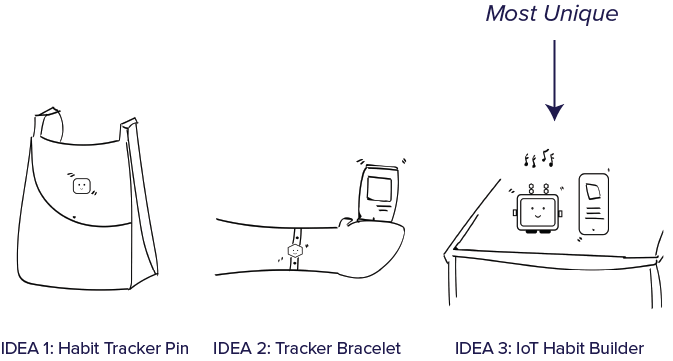
- Idea generation through preliminary sketches
- Early stage concept for AIoT
- Identified situations where product can help solve a problem
- Gathered feedback on concept, scope and uniqueness
- Selected the most unique concept
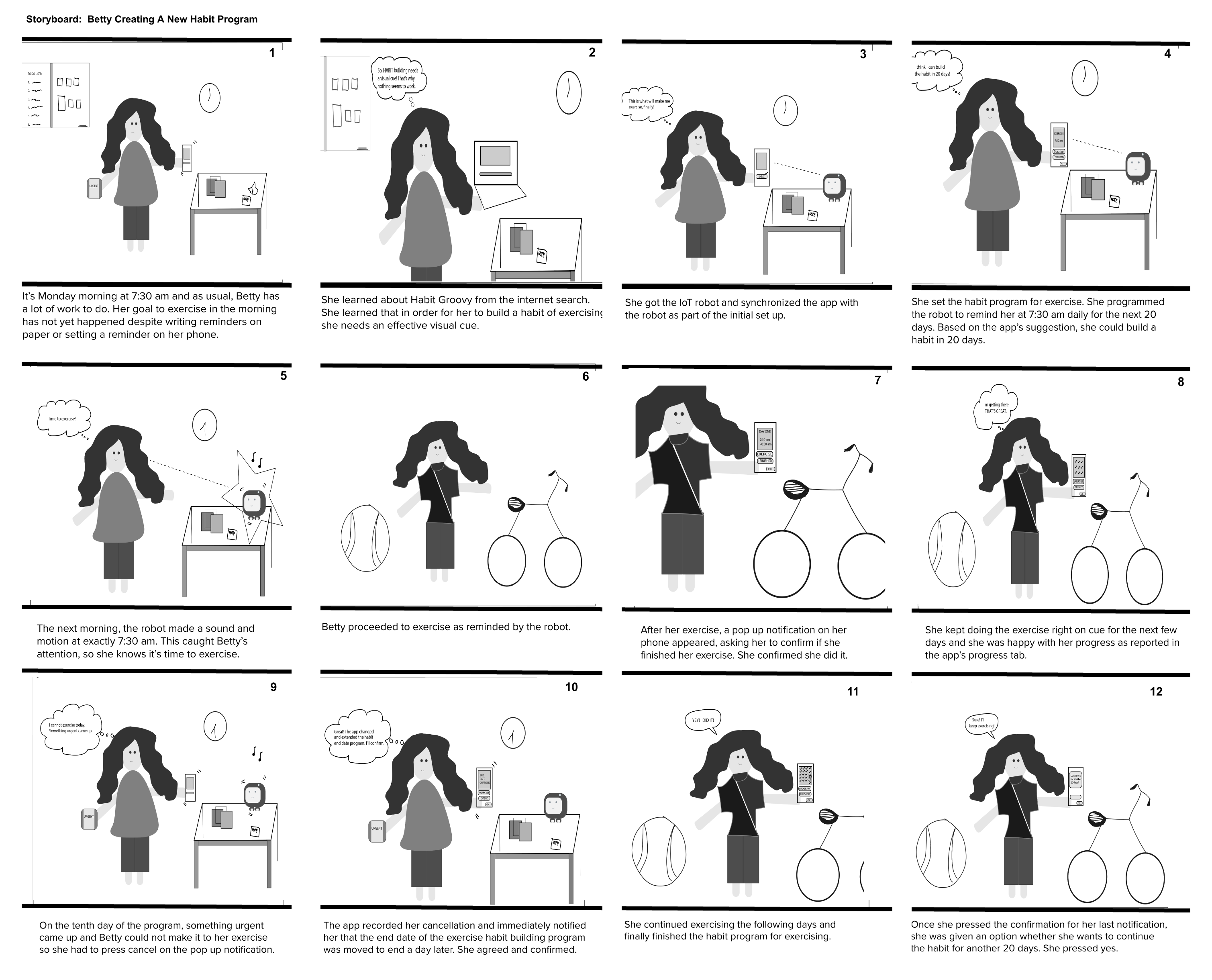
Storyboard
- Understand persona through storyboarding exercise
- Understand product through scenarios
- Gain insight on persona's interaction with the product
Persona and User Story
It’s Monday morning, and Betty is preparing for a demanding week. She balances her MBA studies with a part-time job as a barista at City Bistro. Determined to exercise daily, she previously relied on phone reminders and sticky notes—but they were easy to ignore or lose.
After discovering Habit Groovy, Betty decided to integrate the AIoT robot with the app. She created a new habit program and scheduled the robot to prompt her to exercise every day at 7:00 AM. With its combination of lights and sounds, the robot consistently captured her attention. Within 20 days of following the routine, Betty successfully established a regular exercise habit. She reported her progress, and her results are now contributing to Habit Groovy’s habit database as a benchmark for other users.
Betty Larkin
25 years old, MBA graduate student in San Francisco, CA

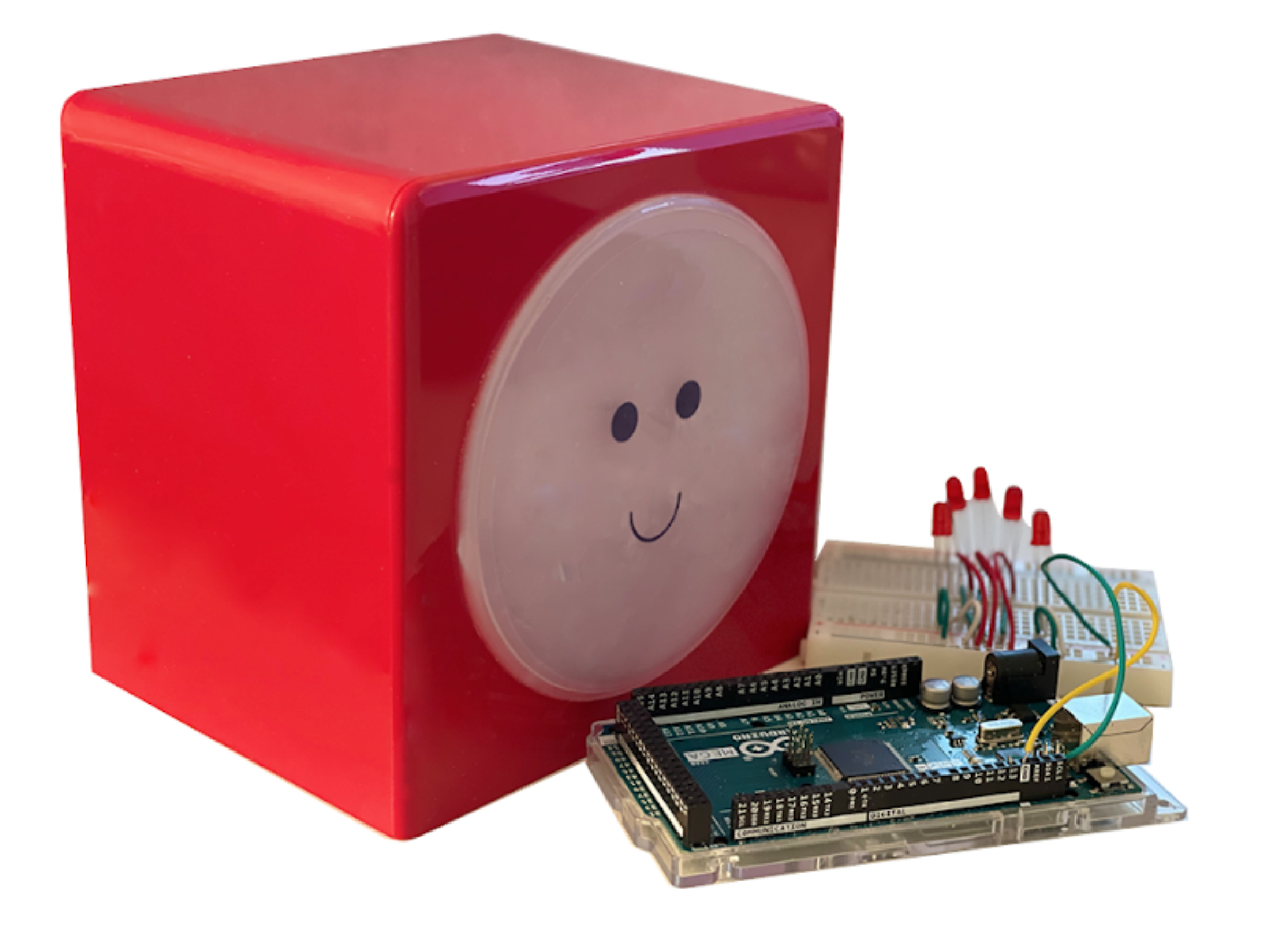
UX Test #1: Usability Test Validates Robot Interaction and Size
- Low fidelity test of robot features
- Sounds and lights programmed in Arduino using javascript libraries
- 7 participants tested
- 100% of testers displayed ease in using the robot to build a habit program
- 100% of testers confirmed the robot was at right size of 4.5" x 4.5"
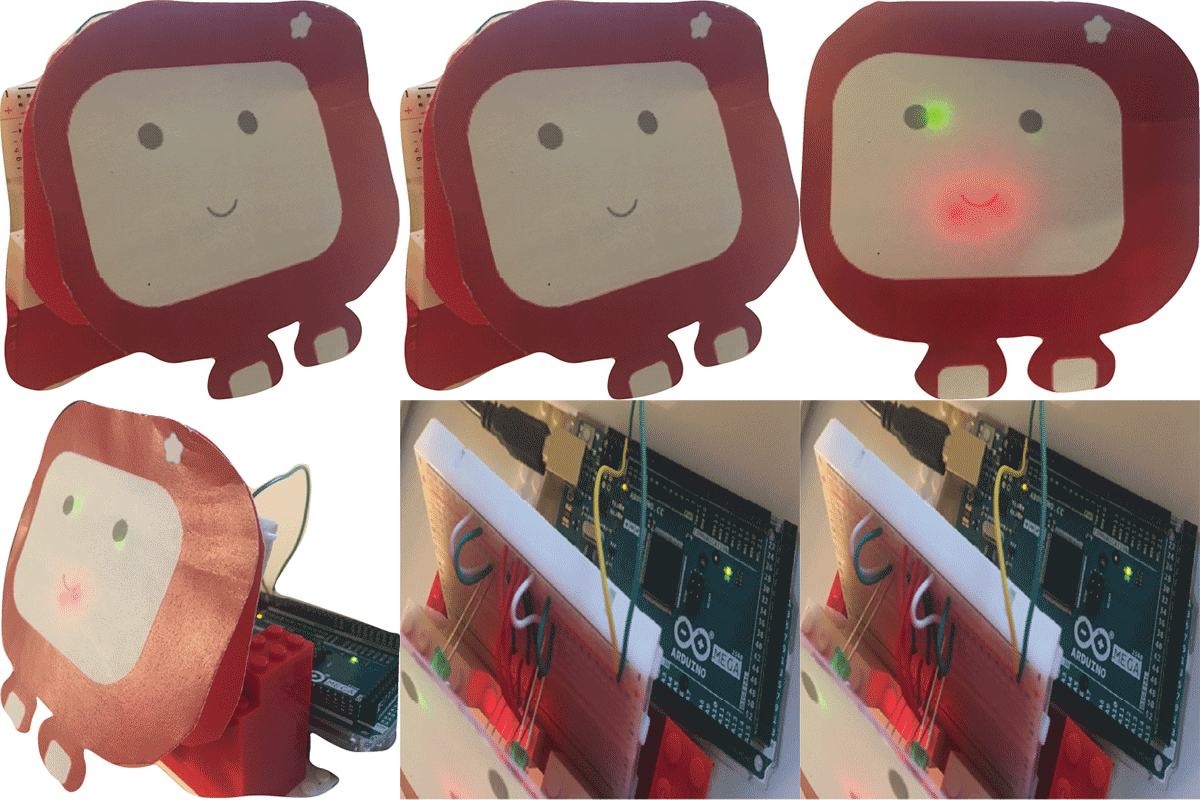
AIoT Robot in High Fidelity Prototype
After the initial findings of the usability test, a high fidelity prototype of the robot was created using Arduino circuitry programming.
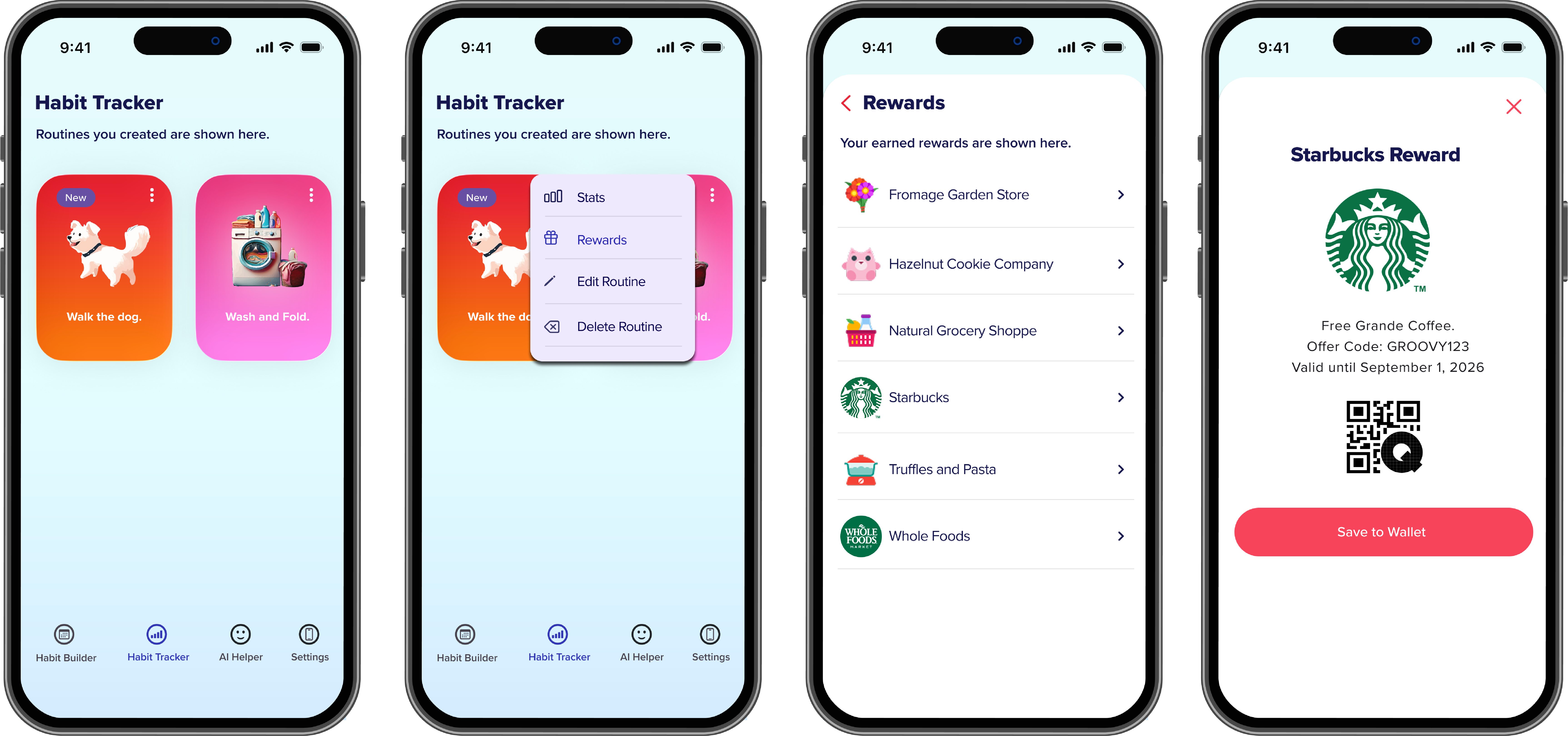
UX Test #2: Prototype Testing Confirms Reward Choices and User Control
- Clickable Prototype Testing
- 11 participants tested
- 81% of testers preferred to receive rewards after completing routine
- Strong preference for food or grocery type of rewards
- 100% would like to have choice and control on what rewards they receive
- The design incorporated stakeholder feedback and updated components in its most recent iteration
UX Test #3: A/B Test Confirms Key Routine Continuation Features
- 3 Participants Tested
- 100% preferred to see a reminder when their routine is interrupted
- Having the option to continue where they left off is a must have feature
- Another must have feature - the ability to change routine schedule when needed
- These key findings were incorporated in the alert feature of the robot, powered by AIoT in its most recent iteration
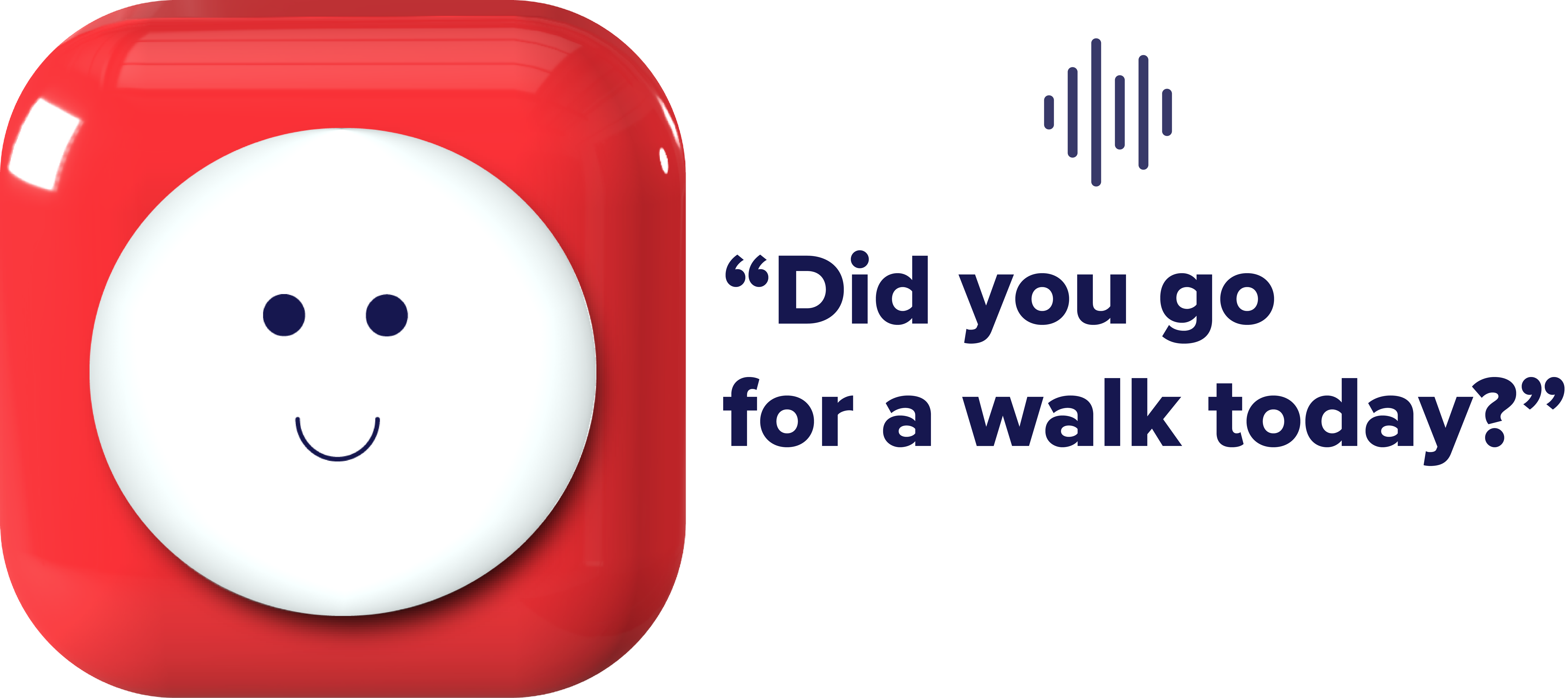
User Flow #1: From IoT to AIoT - Smart Habit Formation
After conducting in-depth research on the psychology of habit formation, I used those insights as the foundation for the product concept. I then led a series of validation studies and user testing to refine the experience. Collaborating with experts in product engineering, IoT, AI, and cloud computing, I redesigned the product from a simple IoT device into an AIoT-powered solution. One of its key features is the robot’s ability to activate lights and sound cues once a habit program is set—serving as gentle, yet effective, visual and auditory prompts to support consistent habit building. The integration of AI and cloud computing enhances real-time feedback and personalization, making habit formation smarter and more intuitive.
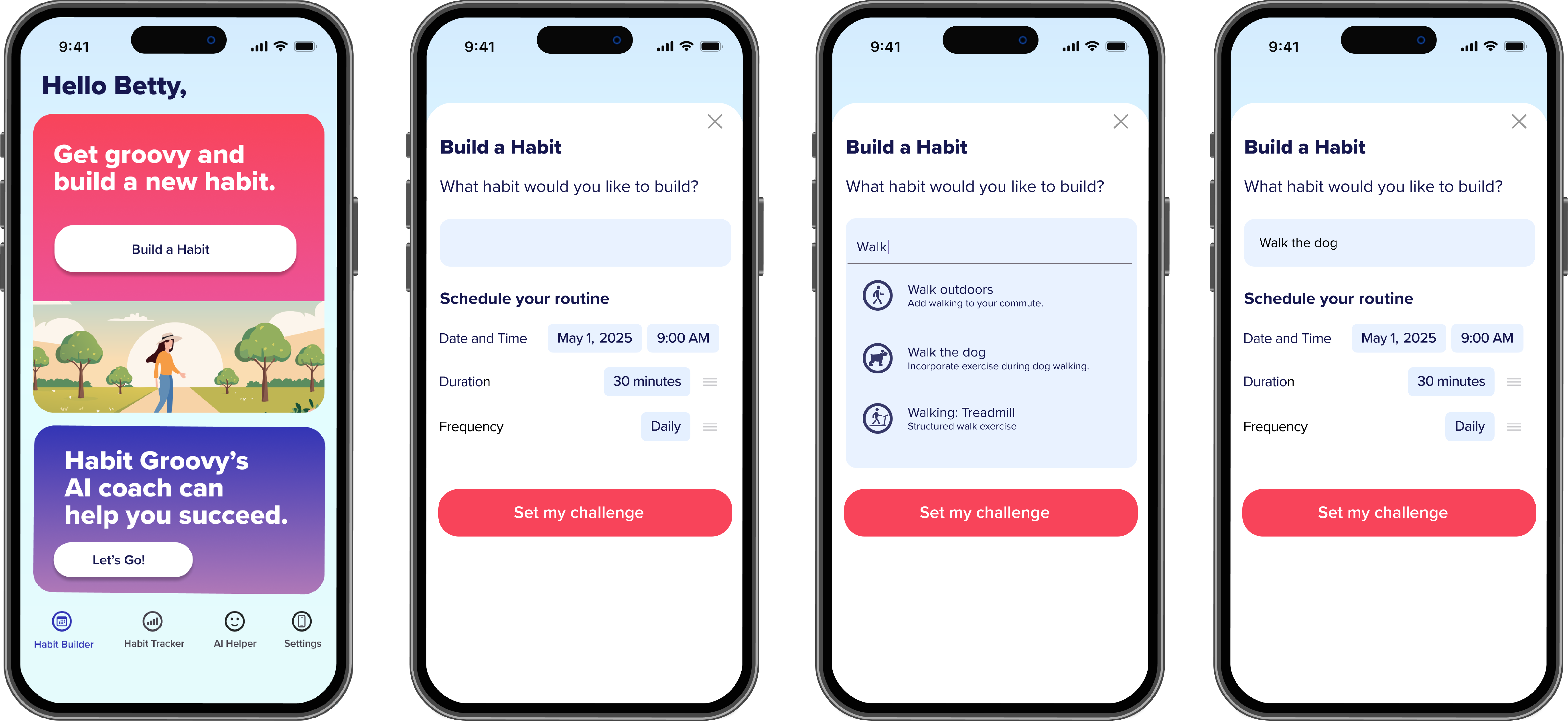
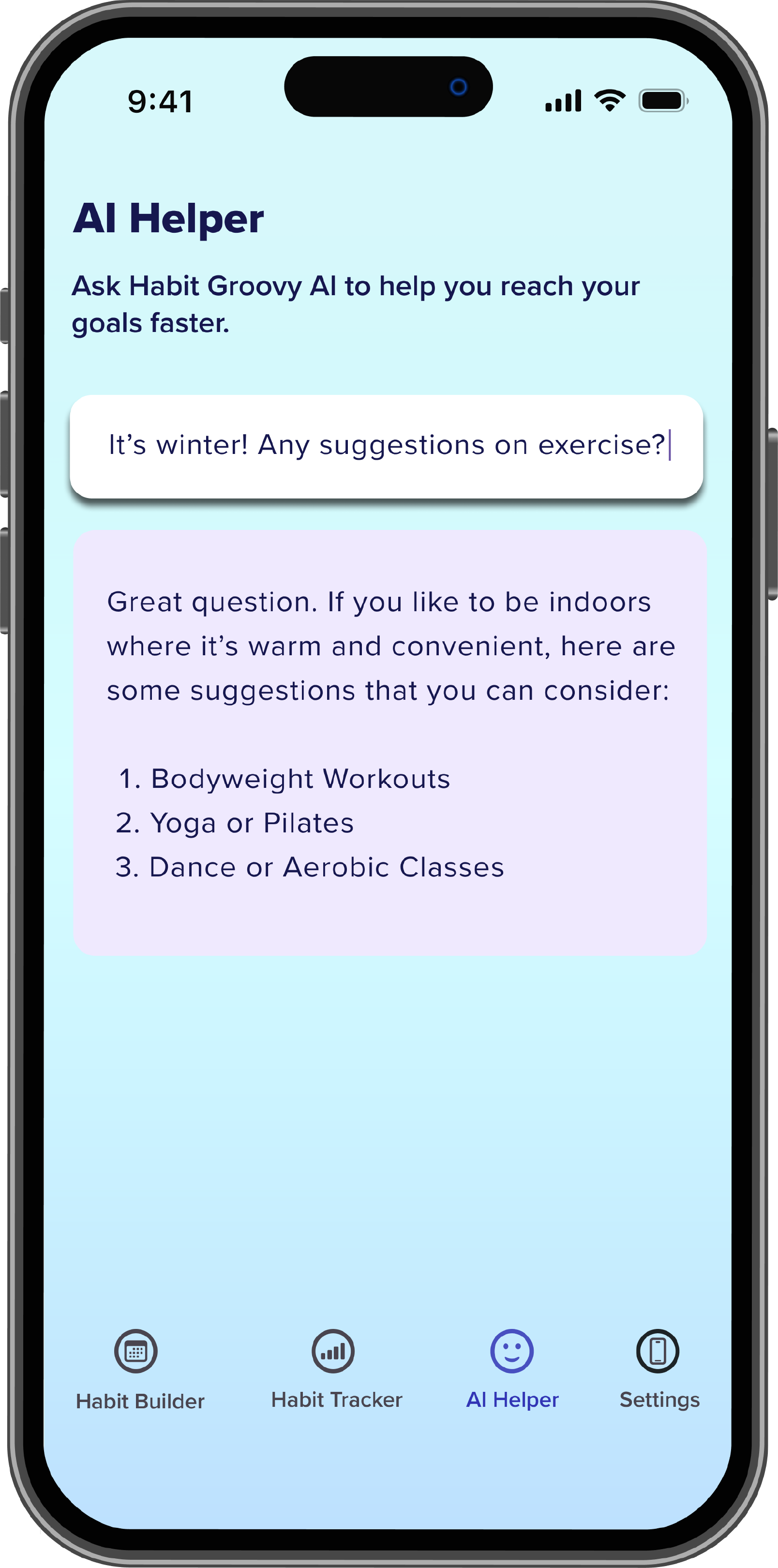
User Flow #2: AI-Driven Guidance and Conversational Habit Support
The robot's main feature involves using complex tech stack like speech to text, natural language processing for context, AI and machine learning, cloud computing, AIoT, voice assistant frameworks to name a few. Another iteration for the app is the added feature of AI assisted chat. A user can now get insights to guide them in their habit building journey.
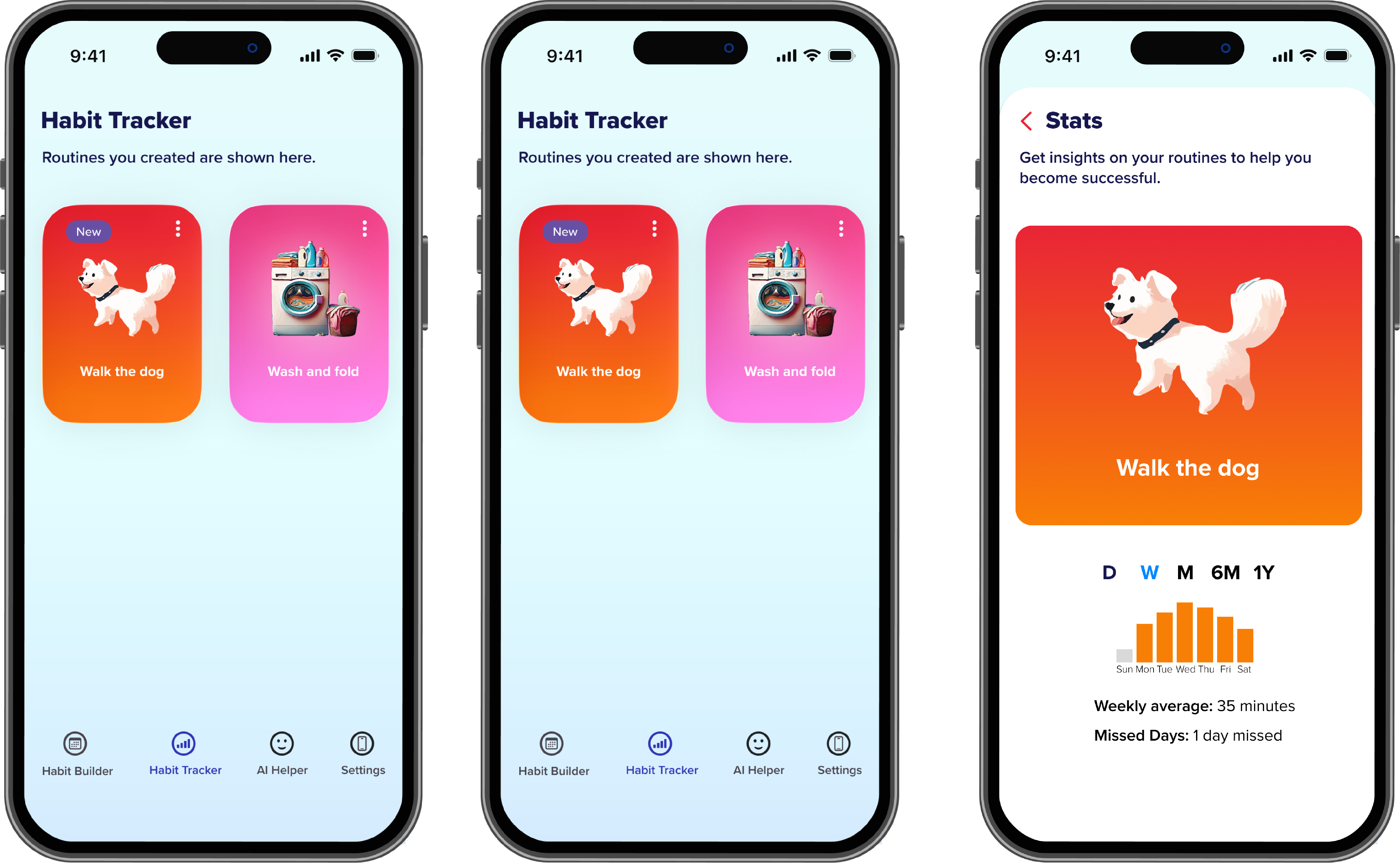
User Flow #3: AI Insights for Smarter Habit Tracking
With the help of AI, the habit tracker captures the user's progress and missed days. Instead of viewing missed days as failures, the system captures them as valuable data points, offering insights into routines, triggers, and potential obstacles. This visibility empowers the user to reflect, adjust, and build habits more effectively. With intelligent feedback, the user can pinpoint when and why habits break down, making it easier to strategize and stay consistent on their path to long-term behavior change.
User Flow #4: Personalized Cues for an Adaptive Habit Experience
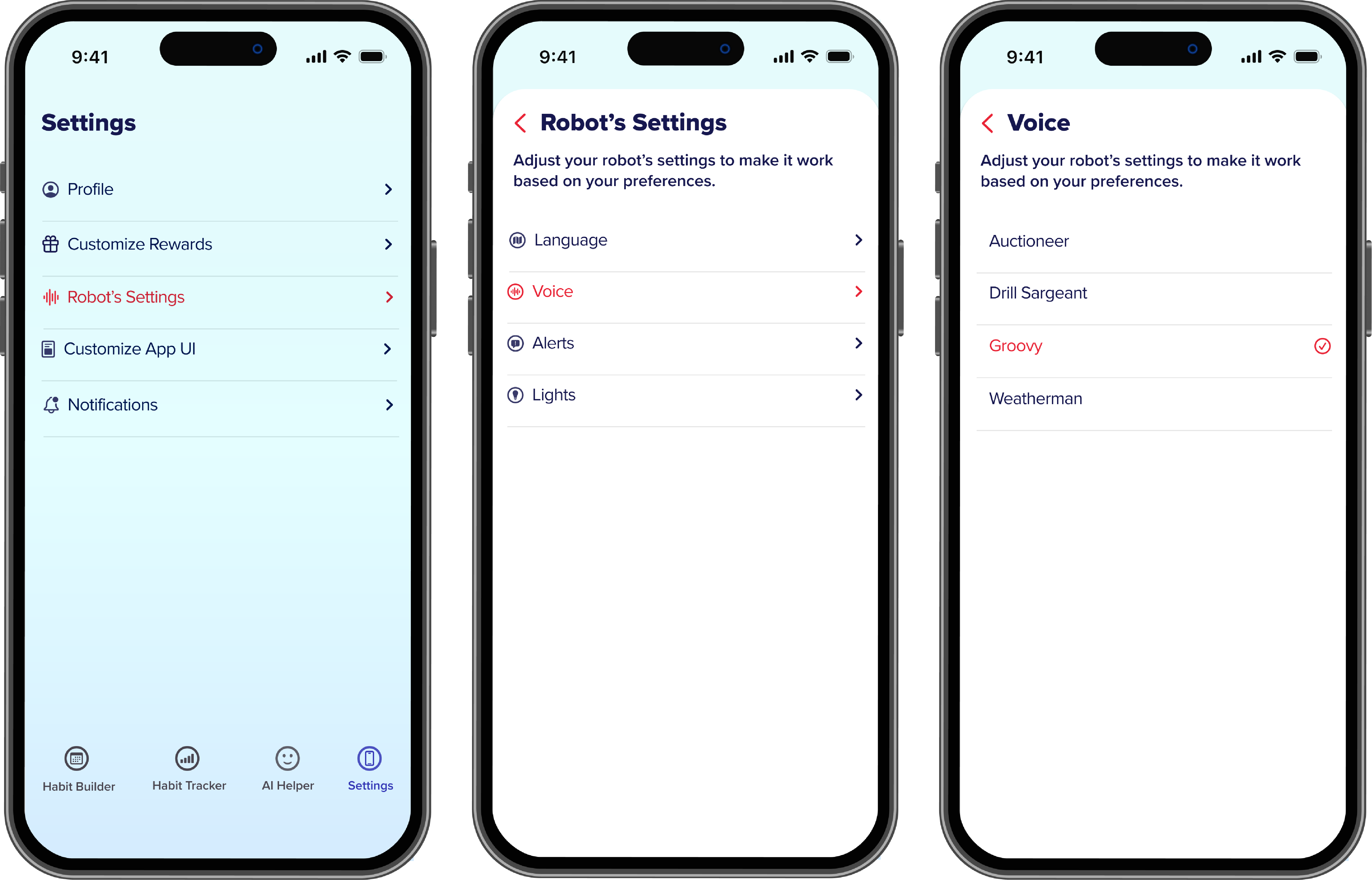
With an intuitive and customizable interface, users can easily personalize their robot's behavior to match their unique preferences. From selecting the type of voice it uses, to adjusting light colors and sound cues, every setting is designed to create an engaging and supportive habit-building experience. Whether you prefer a calm chime, a funny tone, or a gentle glow to guide your routines, the robot adapts to your style—making habit formation feel more personal, enjoyable, and effective.
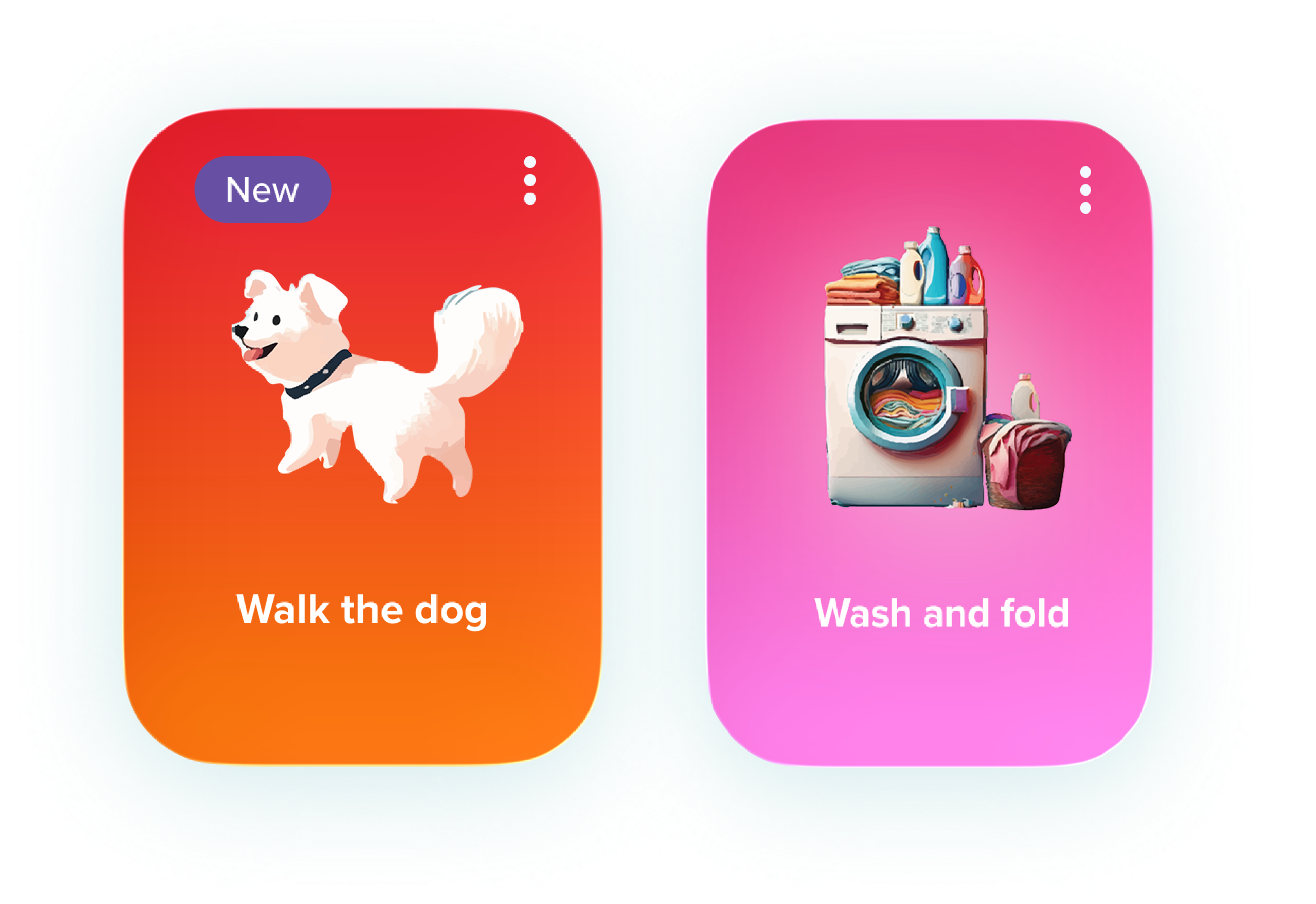
Visual Design: Modern Glassmorphism for an Intuitive, Engaging UI
Inspired by Apple’s modern glassmorphism design language, I incorporated translucent, frosted glass-like tiles into Habit Groovy's interface to create a clean, tactile feel that mirrors contemporary iOS aesthetics. Each tile showcases a habit in a visually distinct container, making it intuitive for users to recognize and tap with ease. The subtle blur effects paired with a vibrant, compelling gradient background not only add depth and elegance but also reinforce engagement and hierarchy. This ensures habits feel both personal and visually rewarding. This design approach balances aesthetic delight with usability, aligning with Habit Groovy’s goal of making habit tracking effortless and enjoyable.

Final Design: Modern Visual System with Expressive Colors
The final design for Habit Groovy is grounded in a clear and cohesive visual system that uses smooth gradients and a vibrant palette of red, blue, pink and orange. These colors introduce warmth and energy while maintaining balance throughout the interface. Proxima Nova provides a modern and readable typographic base that works well across different screen sizes. The robot model was created in Adobe Dimension, giving it a polished 3D presence that aligns with the visual language of the app. The interface remains minimal and structured. Consistent components, with intentional use of color to support navigation and clarity. This approach creates an experience that feels clean, friendly, and straightforward, helping users stay engaged as they build new habits.
Key Learnings
Designing Habit Groovy taught me the power of combining behavioral science with emerging technologies like AIoT to create more intuitive, responsive experiences. Through continuous iteration, multi-disciplinary collaboration, and user-driven validation, I learned how to translate complex systems—habit psychology, data-driven insights, and smart device interactivity—into a simple, motivating tool for daily behavior change. This project reinforced the importance of designing not just for usability, but for emotional resonance, consistency, and long-term impact.
Tools I leveraged for this project include: Adobe Illustrator for design, Dimension for initial robot model, XD and Figma for prototyping and wireframes, After Effects for animation and video, React JS for mobile scheduling prototype, Arduino for the robot's MVP feature of lights and sounds. I also relied on Apple's Design Interface Library with its new glass features and Google's Material Kit. Finally, AI for concept building, research and ideation.
Future Considerations
Habit Groovy’s AIoT ecosystem is designed for ongoing enhancement. Future iterations can deepen AI-driven personalization, including:
- Voice Assistant integration with natural language processing for more conversational guidance.
- Kinetic and haptic improvements to the robot settings.
- Social or collaborative habit tracking to support group motivation and accountability.
- Smartwatch, TV and other smart device integration.
- Cloud-based AI models deliver personalized feedback without device limitations
- Modular IoT design enables iterative production and easy addition of new hardware components
- The mobile app can scale to support multiple habits, more complex routines, and larger user populations while maintaining responsiveness.
- Habit Completion Rate: Percentage of habits completed per user per week.
- Retention: Percentage of active users after 1, 3, and 6 months.
- Engagement with AI Cues: Average daily interactions with robot and app prompts.
- User Satisfaction and Personalization: NPS or Likert-scale scores on usefulness and customization.
- Behavioral Improvement: Reduction in skipped habits over time compared to each user's baseline.
- Reward Redemption Rate: Percentage of brand-offered rewards earned and used by users.
Reward Ecosystem and Brand Partnerships
A key future opportunity is the integration of partner brand rewards tied to habit completion. Users who complete their routines could receive coupons, offers or perks from participating brands. For example, a streak of completed morning habits might unlock a free coffee at Starbucks. This structure increases user motivation, supports long-term engagement, and creates a scalable business model through brand partnerships that benefit both users and participating companies.
Scalability
The platform's architecture supports growth without compromising performance:
Hypothesis for Future Experimentation and Success Metrics
To measure long-term impact and guide future iterations, Habit Groovy could track:
These additions support a scalable ecosystem that combines personalized habit formation with meaningful reward loops. As Habit Groovy evolves, this integrated approach strengthens user engagement, improves behavioral outcomes, and opens the door for future business growth through brand collaborations.