Overview
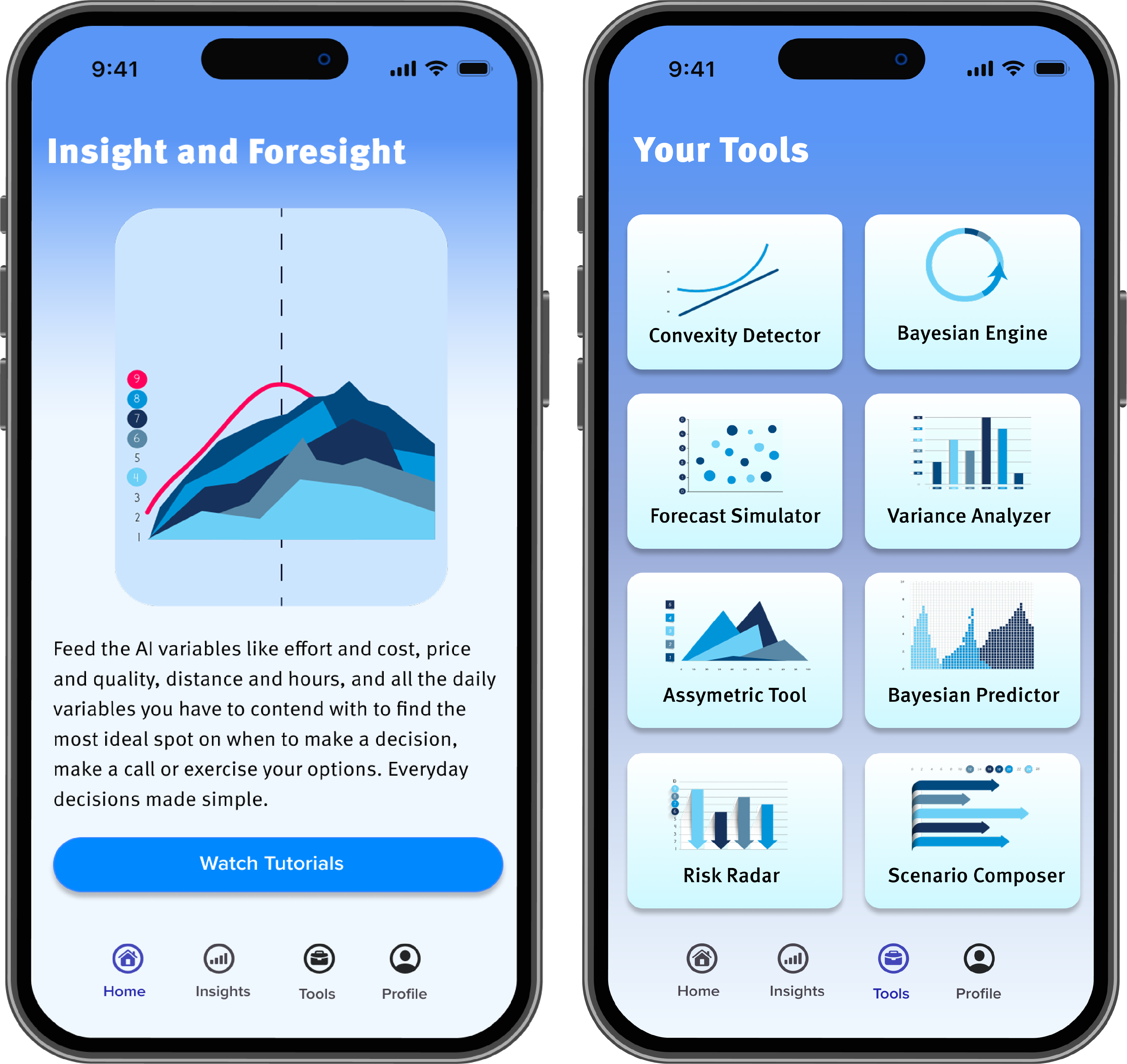
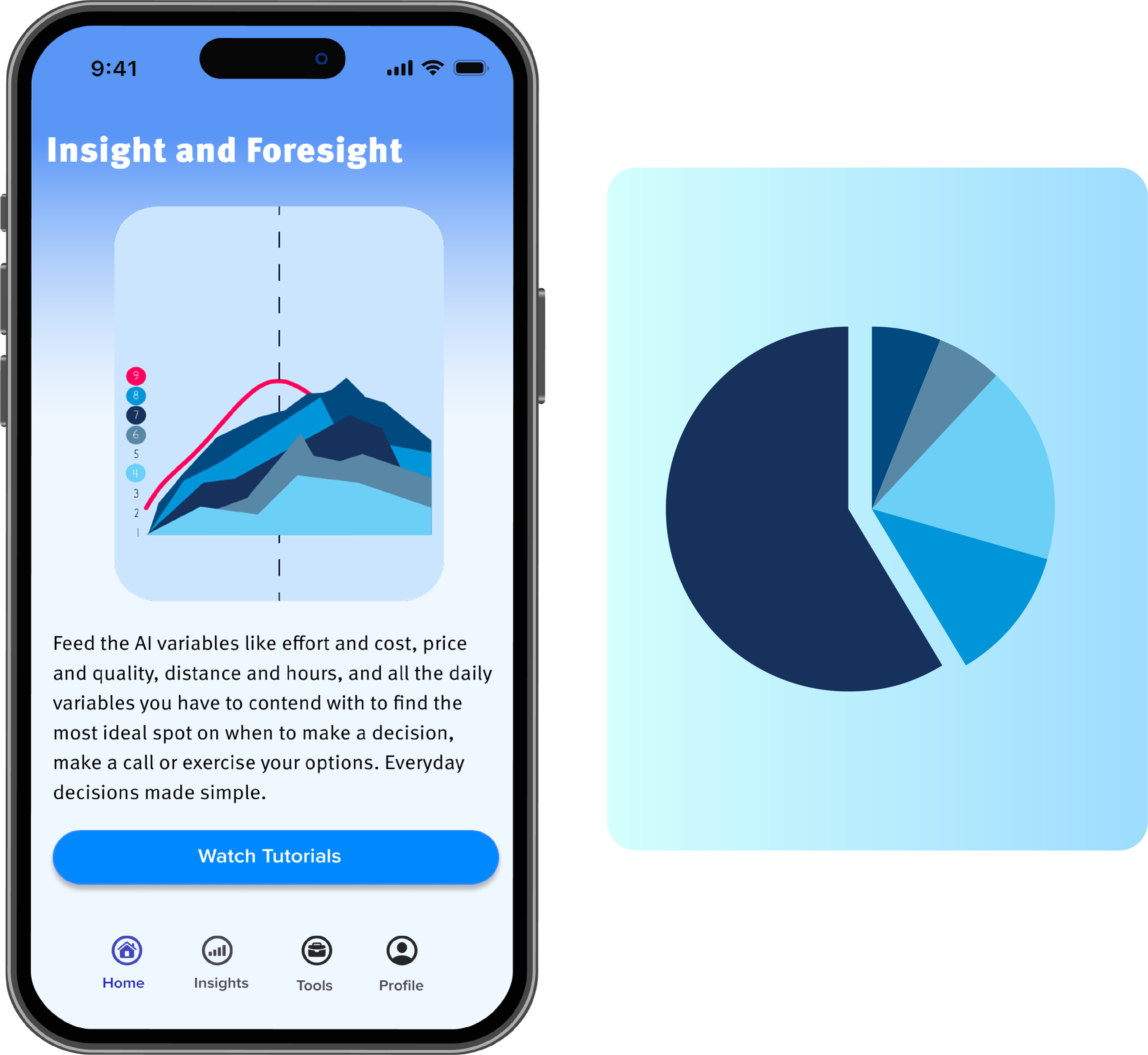
People face hundreds of complex decisions across work and personal projects, from budgeting and resource allocation to prioritization and risk management. Polaris Arc is a decision intelligence platform that makes these challenges approachable, turning mathematical and probabilistic models into actionable insights.
The Challenge
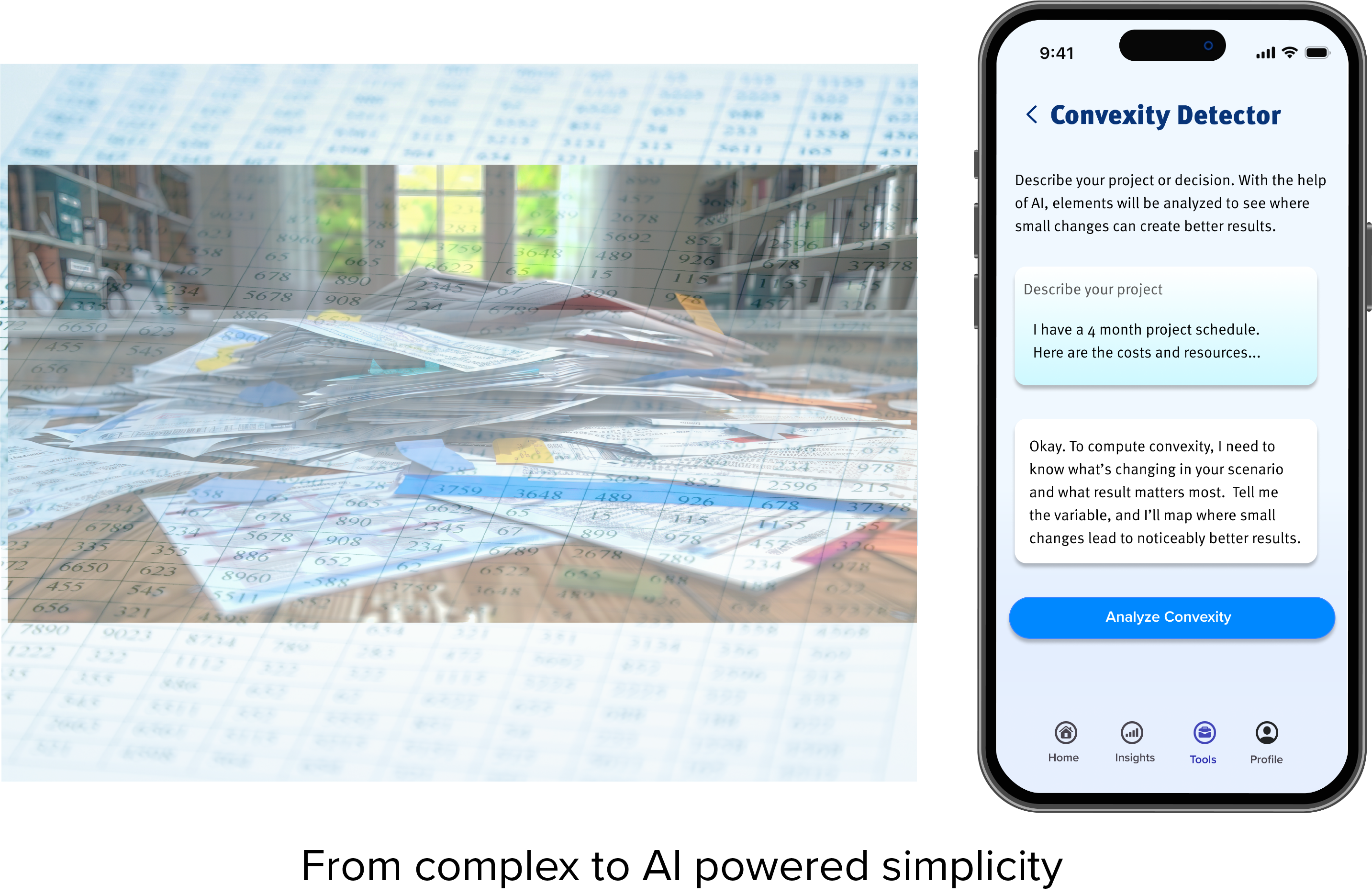
Traditional tools are rigid. Spreadsheets require formulas, dashboards demand expertise, and quantitative models remain inaccessible to everyday users. Our challenge was to make concepts like Bayesian reasoning, variance, and convexity intuitive—without forcing users into structured forms or formulas. Polaris Arc needed to reveal hidden opportunities, expose fragilities, and highlight leverage points through a natural, conversational interface.
Key Objectives
- Simplify complex quantitative reasoning for non-expert users.
- Enable scenario modeling using plain-language prompts.
- Reduce cognitive load in high-uncertainty planning.
- Provide actionable insights to inform better decisions.
My Role
I led the product vision, UX architecture, and interaction model for Polaris Arc. I translated advanced mathematical models into a conversational decisioning experience, designed how the AI interprets ambiguity, and ensured probabilistic outcomes were presented in a strategic and easy-to-understand format.
Research and Insights
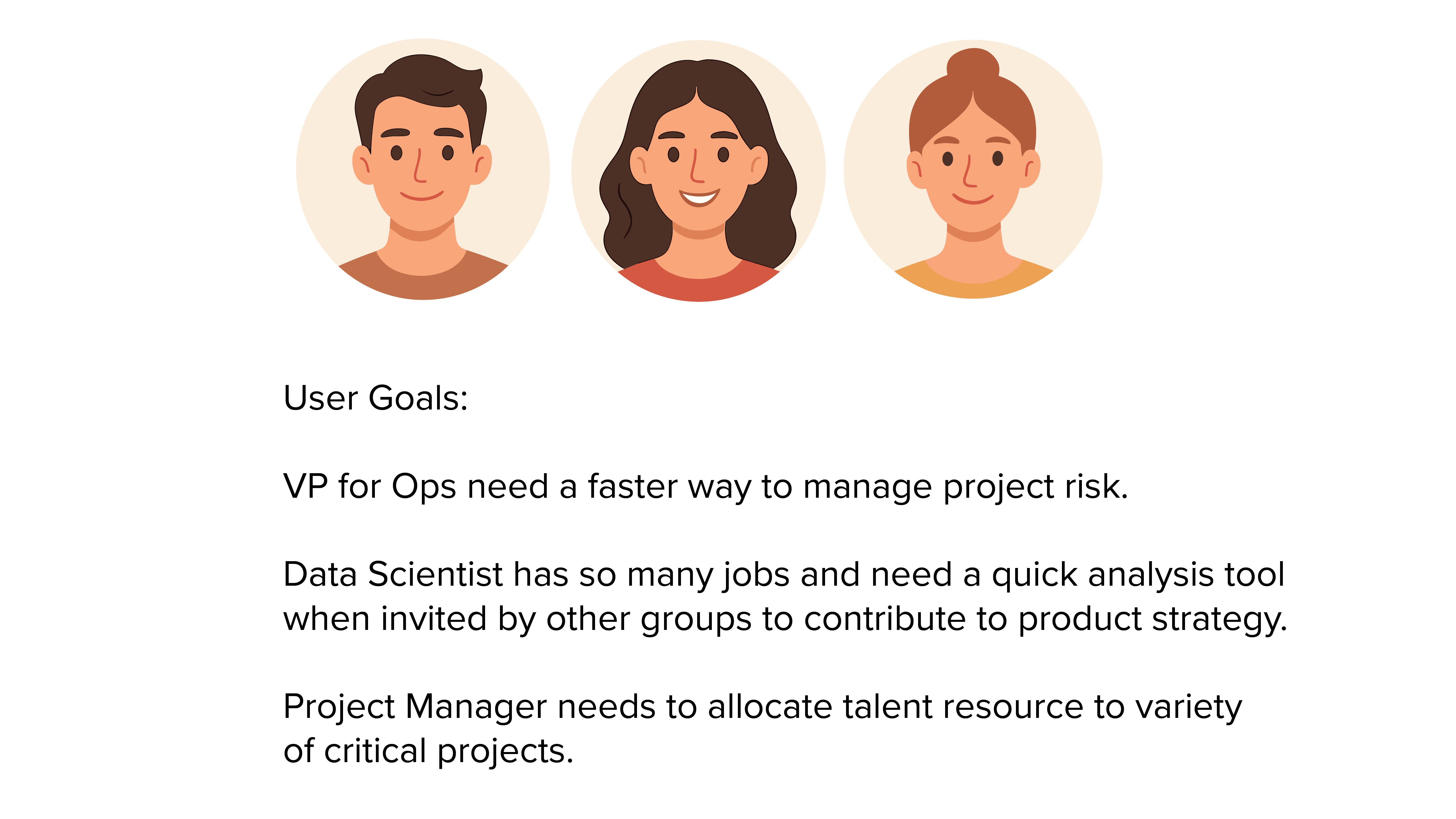
Preliminary interviews were conducted. Discovery also included observing real-world professional workflows, where project leads, analysts, and domain experts routinely needed to assess risk, allocate resources, and make interdependent decisions—revealing critical gaps in how teams articulate uncertainty and evaluate trade-offs. Design and product assumptions were also included using academic literature on decision-making under uncertainty, Bayesian belief updating, and convexity in decision science to name a few. For project-focused users, managing cost and schedule risk via probabilistic forecasting is well established in academic and professional settings.
- There is a strong theoretical backing for using Bayesian models to help users update their beliefs and reflect uncertainty in real time.
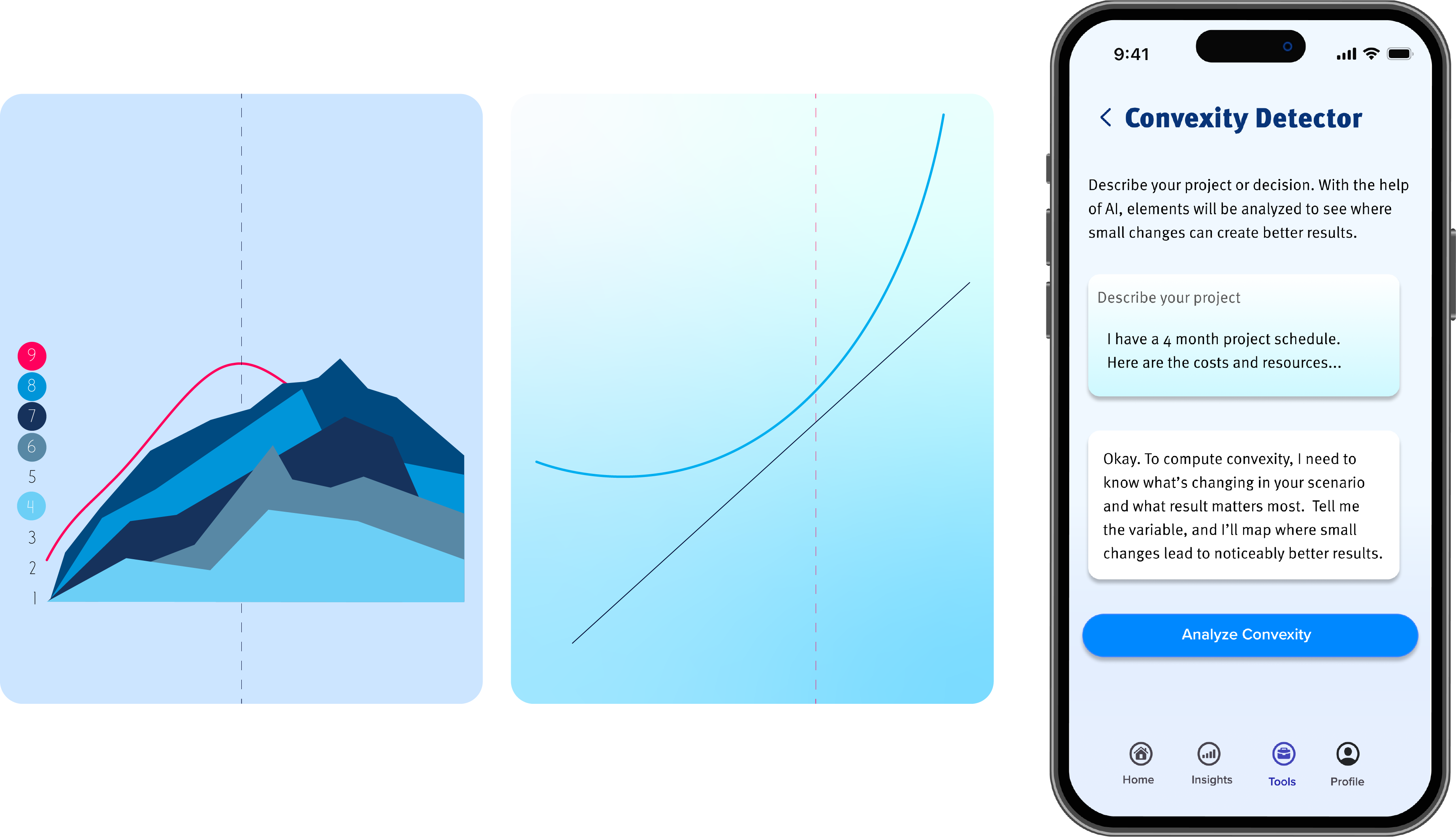
- Assymmetry in outcomes (convexity) is not just an abstract concept, but one that engineered systems and decisions fundamentally rely on.
- Decision-making tools that make probability, risk, and uncertainty more tangible (e.g. via simulation, visual models) align with educational research on decision literacy.
- For project-focused users, managing cost and schedule risk via probabilistic forecasting is well-established in academic and professional settings.
Design Principles
- Clarity: Present insights without overwhelming the user.
- Contextual Reasoning: Adjust guidance based on user input and context.
- Conversational: Enable reasoning through natural language prompts.
- Actionable: Highlight decisions, not just data.
Solution: Interaction Model
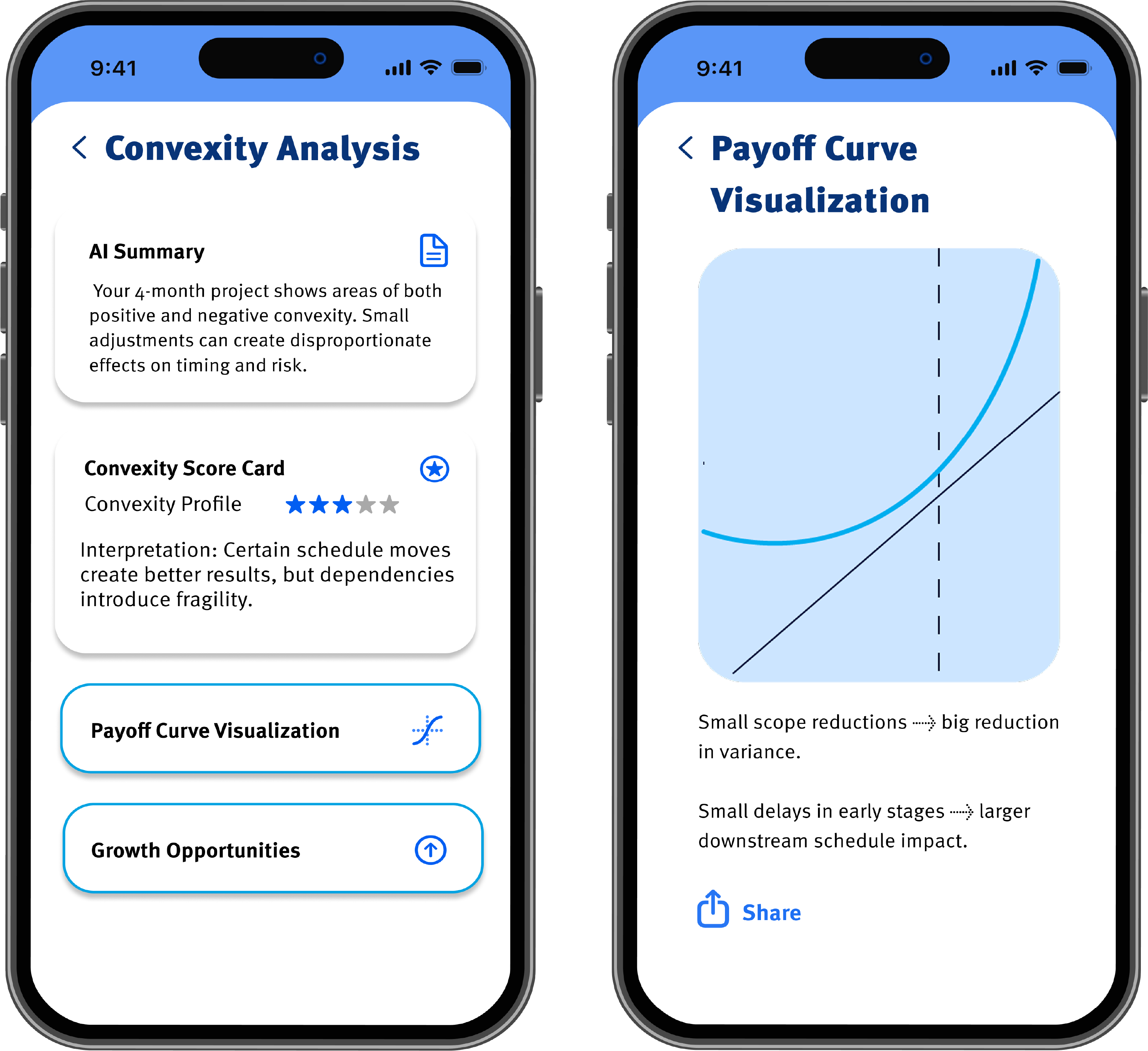
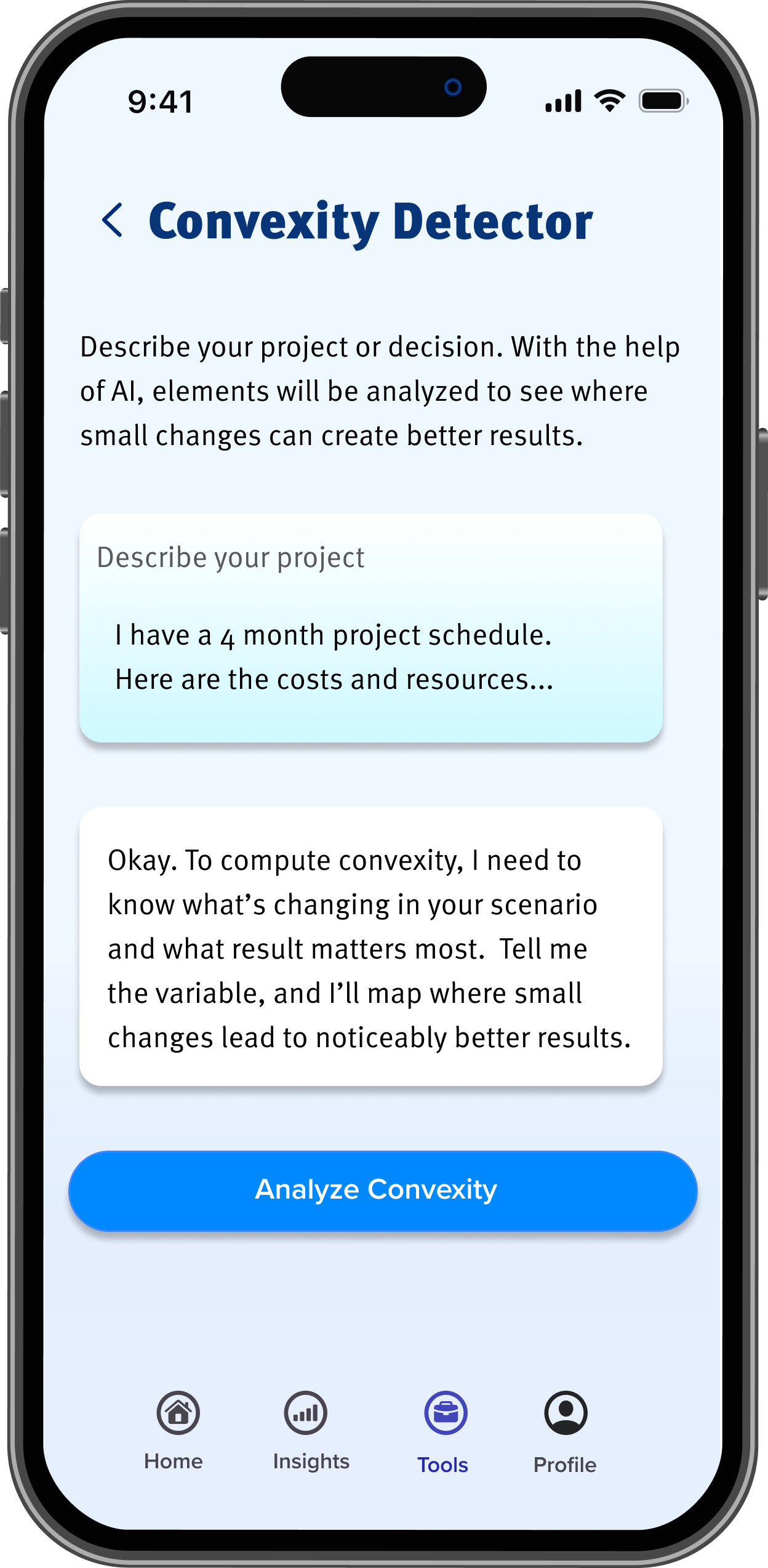
Users describe their projects in their own words using a single prompt box. The system infers timelines, dependencies, and risk factors, requesting only minimal clarifications. AI reasoning layers translate math into narrative insight, providing both high-level guidance and detailed analysis.
Visual Design and Information Architecture
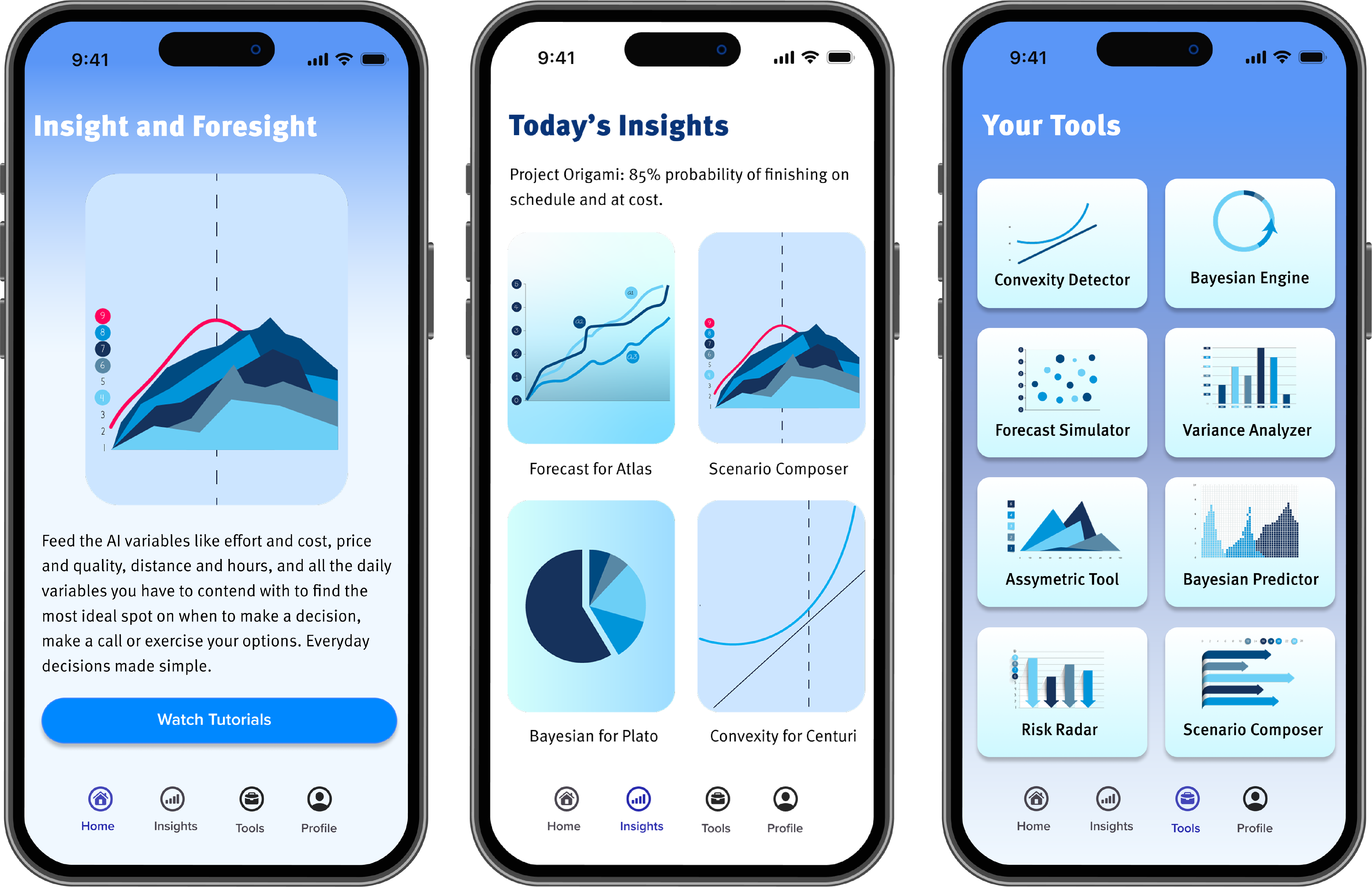
- Insights Screen: Lightweight, mobile-first visualizations reveal trends, opportunities, and fragilities without overwhelming users.
- Tools Flow: Users can explore multiple tools for simulation, risk modeling, and strategic planning.
- Alerts: System could also identify material changes such as increased risk, emerging patterns and deliver context-aware summaries.
Iterative Prototyping and Testing
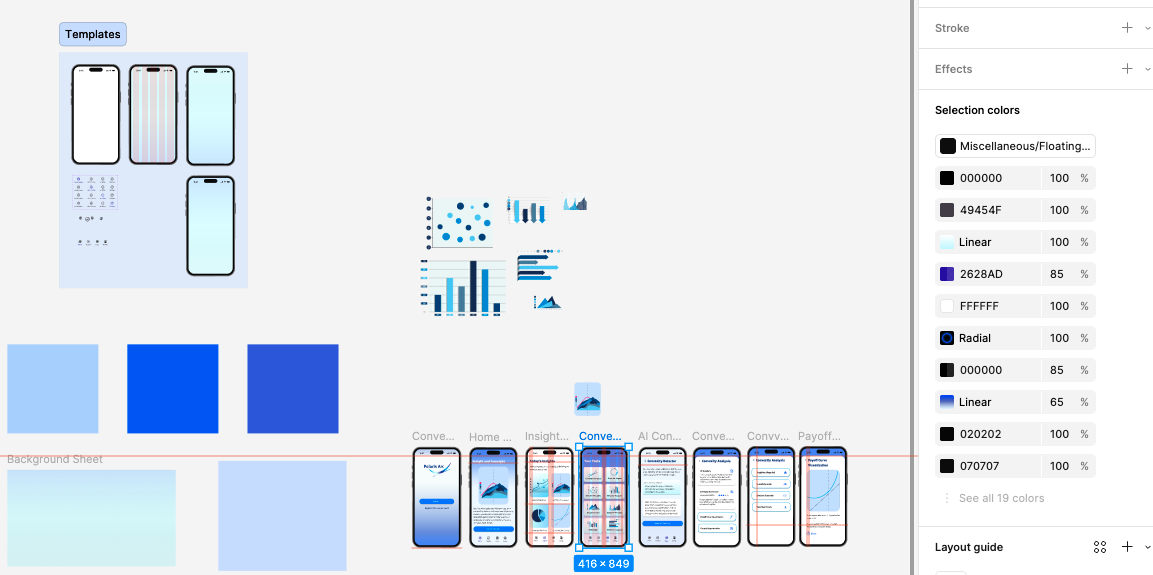
Multiple design iterations validated navigation, clarity and interpretability of outputs. For faster discovery and exploration, curated UI kit for data visualization was used ensuring that the color palette provide a minimalist design direction. Feedback loops helped refine visualizations, AI prompts, and interactive elements to improve usability and engagement.
Learnings
Simplifying complex math requires careful layering of information. Conversational AI can reduce friction but needs clear signaling of assumptions, dependencies, and confidence levels. Design must balance transparency with usability to ensure adoption.
Key Takeaways
Polaris Arc demonstrates that decision intelligence can be made approachable, collaborative and actionable. By integrating AI, natural language, and lightweight visualizations, abstract quantitative models become tools that support everyday strategic thinking.