
The Challenge
FICO's industry events bring together global leaders in risk management, data analytics and financial innovation. The project's goal involved insuring that the registration process is not fragmented and slow. A unified events management solution was needed to deliver frictionless registration, clear agenda management, and meaningful engagement between participants and organizers.
My Role
I led the UX design and product implementation of a new FICO Events App, partnering closely with engineering and event operations team to ensure a seamless experience from concept to launch. My work focused on:
- Streamlining Registration Flow: Designed mobile-first registration process that aims to reduce drop-offs and simplified data entry.
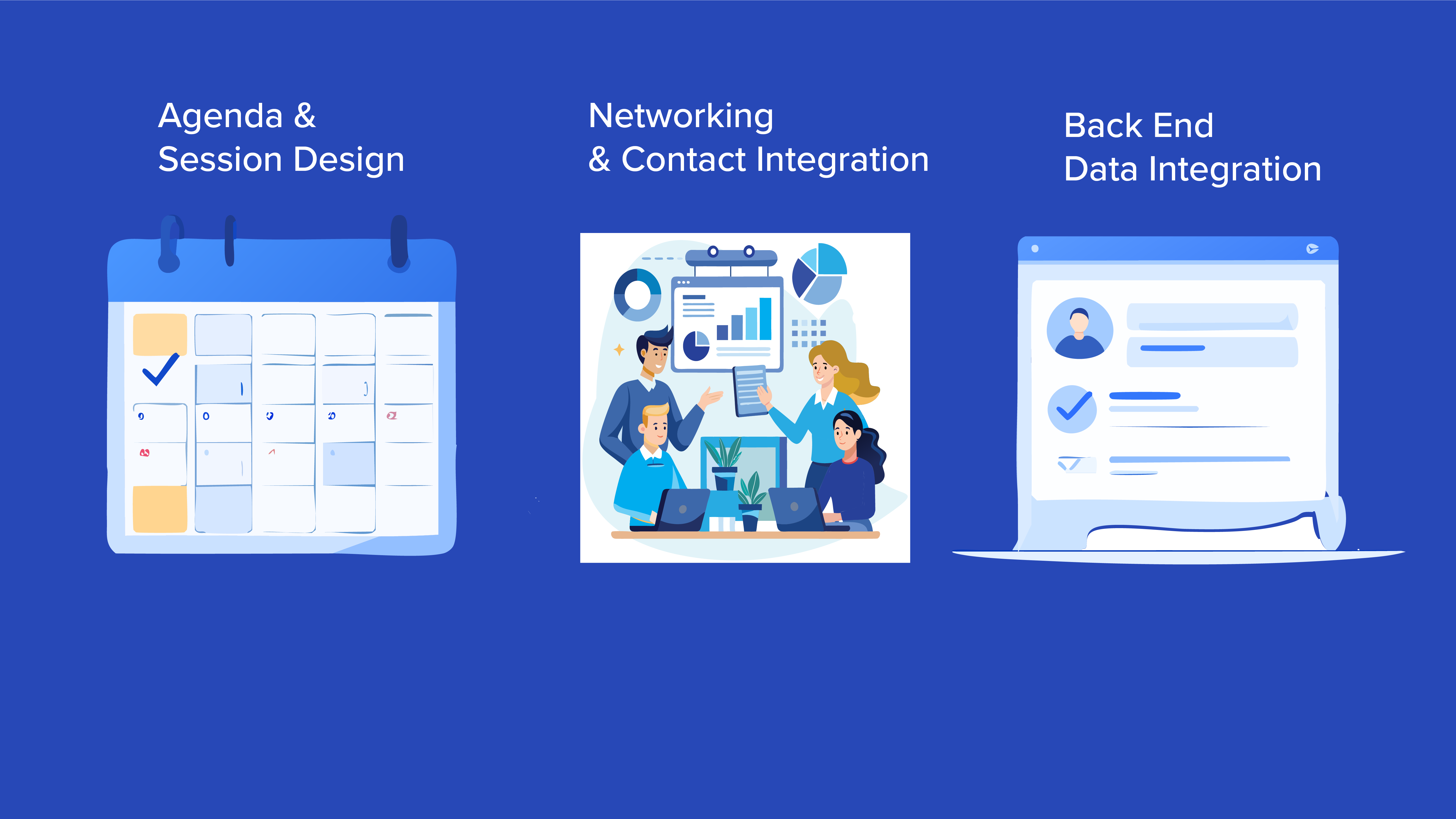
- Agenda and Session Design: Real-time confirmation and calendar integration. Minimal input screens and auto-validation.
- Networking and Contact Integration: Introduced a "connect" feature with curated contact recommendations based on professional interests and industries.
- Back-End Data Integration: Collaborated with developers to configure a secure and flexible database for managing attendee data, engagement analytics and content updates.
- Agile and Collaborative Process: Ensured every interface element was supported by clean, scalable code.
Impact
- Operational Efficiency: Backend data syncs reduced setup time for event staff by estimated 40%.
- Brand Experience: Seamless FICO event management and registration process elevating experience for risk managers and industry participants.
- Higher Engagement: Attendees can explore more sessions through improved agenda and topic views.

Confidential
- Data Points: While the data and this project is confidential you can view similar case studies for reference.
- Parallel Projects: Feel free to view a similar project called Project Convex Arc showing substantial improvements in process efficiency.
Key Takeaway
This project showcases how clear UX strategy, collaboration and attention to process can turn a complex, high stakes experience into something simple and human - even without AI. Design excellence isn't always about new technology; sometimes it's about removing friction and creating pathways that simply work.